Small knowledge about air source heat pump water heaters
Aug 26, 2024
Under the strong promotion of "coal to electricity", air source heat pumps/water heaters have become one of the most popular electrical appliances nowadays. However, many consumers are still unclear about the principles and performance of air source products.
1. Does the air source heat pump need to be on duty when it is running in large places?
Answer: Not at all. The intelligent technology of air source heat pumps is now very mature. The air source heat pump has a built-in electronic chip, and the entire unit has achieved intelligent control. Users only need to set the relevant parameters at the beginning of use, and the heat pump can run automatically, so that there is hot water at any time 24 hours a day, avoiding the water temperature from being hot and cold.
2. When the temperature reaches below zero, can the air source water heater still operate normally?
Answer: Of course, air-source products have long overcome the limitations of low-temperature environments. Air source water heaters can also operate normally in an environment of more than ten or twenty degrees below zero, which can cope with the severe cold climate in various parts of the country.
3. How does the cooling capacity of air-energy water heaters compare to that of air conditioners?
Answer: The cooling air of air-energy water heaters is a byproduct of hot water production. Although it may not achieve the effect of air conditioning at low temperatures, it is produced through "water circulation", which makes people feel more comfortable and does not have the "dry cold" feeling of air conditioning. In addition, the cooling air is completely free, and it is not a problem to meet the cooling needs of the room in summer.
4. Does air-energy equipment require a dedicated machine room?
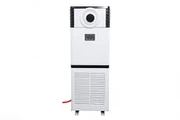
Answer: No, air-energy heat pumps can be placed on the roofs, balconies, etc. of buildings without affecting the appearance and will not be blown off by strong winds. Air-energy water heaters are even smaller in size. Mi has multiple series of all-in-one machines that combine water tanks and main units. They can be wall-mounted indoors or on balconies to achieve "zero land occupation".
5. Can air-energy water heaters take advantage of off-peak electricity prices?
Answer: Yes, and they are automatically controlled and operated. When designing the air-energy water heater unit, the corresponding insulated water tank is configured according to the user's hot water consumption. The insulated water tank has a good insulation effect. At the same time, the air-energy unit has a timed start and stop function, which can produce hot water and store it in the insulated water tank during low electricity prices.
6. Is the air-energy water heater expensive?
Answer: It is indeed more expensive than electric water heaters and liquefied gas water heaters, but the air-energy water heater uses the heat in the air as energy, and the air is free, so the cost of use is much lower than the former two, and the cost performance is higher.
7. How long is the service life of the air-energy water heater?
Answer: Generally about 10 to 15 years. Electric water heaters are generally replaced after 6 to 8 years. Air energy ensures long-term use.
8. How to choose a water tank for a household air-energy water heater?
Answer: It depends on the number of family members and actual water consumption. Generally, a family of 1 to 3 people is equipped with a 120L or 150L water tank, a family of 3 to 5 people is equipped with a 150L or 200L water tank, and a family of more than 5 people is equipped with a 200L or 300L water tank.
9. Is an air-energy water heater suitable for rural areas?
Answer: Of course, rural areas are an important market for air energy. Rural families generally have a large population and a large water demand, while air-energy water heaters have high water output, low energy consumption, and are subsidized by the state, so they are naturally popular with users.