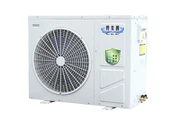
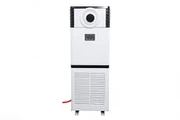
Cold winter is coming, air energy heat pump heating should be prepared for startup
Jun 06, 2025
Waves of cold currents continue to invade, announcing that the cold winter is coming, and many areas have prepared for heating. As a new type of environmentally friendly heating equipment, air energy heat pump has its advantages of environmental protection, energy saving, stability, safety, multi-function, long life, etc. It has appeared in the HVAC market and is favored by many customers. There are many things to pay attention to when using air energy heat pump heating, especially the preparations before starting and the precautions after starting.
Preparation before starting the air energy heat pump
1. Check the condition of the outdoor unit
The air energy heat pump unit has the function of heat exchange with the air, so the area around the unit should be kept clean and dry and well ventilated. If there is any foreign matter, it should be handled in time. Pay special attention to the fins and blades of the unit. When the fins are blocked by dust and debris, it will affect the heat exchange capacity of the unit, reduce the heating effect, and increase energy consumption. Dust and debris on the blades will increase the burden of motor rotation and may also cause blade damage and noise.
2. Check the water pipe system and the electric control system
Check the heat pump system thoroughly, check whether the pipes, water pumps, filters, etc., are blocked by dirt or seepage, and then check whether the insulation pipe is damaged. The rupture of the insulation pipe will cause more heat loss and reduce energy consumption. Check whether there is no virtual connection at the connection of all lines. Whether the line is damaged and whether the line is seriously aged. If there is an independent electric control cabinet designed, it is necessary to clean the spider webs, leaves and other debris inside.
3. Clean the air energy heat pump system
Clean the heat source part. First, clean the pipe filter, disassemble the Y filter, clean the impurities on the filter, and then reinstall it back to its original place; secondly, clean the evaporator and spray the fins of the heat pump host evaporator with a special detergent. After soaking for a few minutes, use an iron brush to clean the dirt on it, and then clean it with clean water; finally, clean the cooler, pour the prepared detergent into the pipe system, introduce the detergent into the cooler through the water pump circulation, repeatedly clean the internal dirt, and then rinse the dirt in the pipe with clean water.
Clean the tail. There is water in the floor heating pipe for a long time, and the scale, microorganisms, impurities, biological slime and other components in the scale slowly cause the inner wall of the floor heating pipe to be blocked, thereby increasing the thermal resistance, affecting the floor heating, and reducing the service life of the floor heating system. Therefore, it is recommended to clean the heating tail every 2-3 cycles.
Precautions after the air energy heat pump is started
1. Check whether each component is operating normally
When turning on a large unit, the compressor should be preheated, and the power of the unit should be turned on in advance to ensure that the preheating time exceeds 8 hours to avoid compressor cylinder failure caused by freezing of the compressor lubricating oil and prevent damage caused by forced start of the compressor. After starting, check whether the various components of the host are normal for the first time, such as water pumps, fans, compressors, sensors, expansion valves, etc. Of course, these all need to be evaluated by professionals. As a customer, only regular maintenance is required, and after a fault occurs, the fault code can also be given through the operation panel. If a part is damaged and needs to be replaced, do not buy mismatched parts at will, but buy matching parts through professionals to ensure the smooth operation of the unit.
2. Clean up the debris around the heat pump unit
Good ventilation is the primary prerequisite for the normal heat exchange of the heat pump unit. Therefore, cleaning up the debris around the heat pump unit is a very important stage to ensure efficient heat exchange between the heat pump unit and the air and reduce energy consumption. The heat pump units used in the south are most susceptible to vegetation, so it is necessary to clean up the debris around the heat pump unit and do not pile up debris around the heat pump unit; the heat pump units used in the north are most susceptible to snow accumulation, so it is necessary to clean up the snow around the heat pump unit, keep the heat pump unit drained smoothly, and prevent ice climbing.
3. Do not shut down the unit
When using the air energy heat pump in winter, the heat pump unit must not be turned off at will. Since the air energy heat pump mainly uses Freon (carbon dioxide) as a refrigerant and water is mainly used as a heat transfer medium indoors, when the ambient temperature is below -5℃, the water in the pipe will cool down sharply and even freeze. Once the heat pump unit is without power for more than 5 hours, the heat pump unit and the pipeline may be damaged. Especially under the premise that the fluorine circuit system and the water channel system are damaged at the same time, the restart of the compressor can easily suck the water in the water channel directly into the fluorine circuit system, causing a major failure of the heat pump unit and promoting the scrapping of the heat pump unit.
If the heat pump unit does not need to operate for a short period, its set value can be adjusted to the minimum to conserve energy, maintain the unit's antifreeze function, and ensure basic protection. If the heat pump unit needs to be shut down for a longer period, the live connection and gate valve should be opened in advance to drain all water from the pipeline, to prevent freezing caused by low ambient temperatures. In addition, adding antifreeze to the pipeline can also have a certain antifreeze effect. The specific treatment method can be determined according to the actual use and unit performance. However, if you choose to drain the system, be sure to remember to close each drain valve again after the water is completed to prevent gas from entering the pipeline system and causing internal corrosion of the pipeline system.